


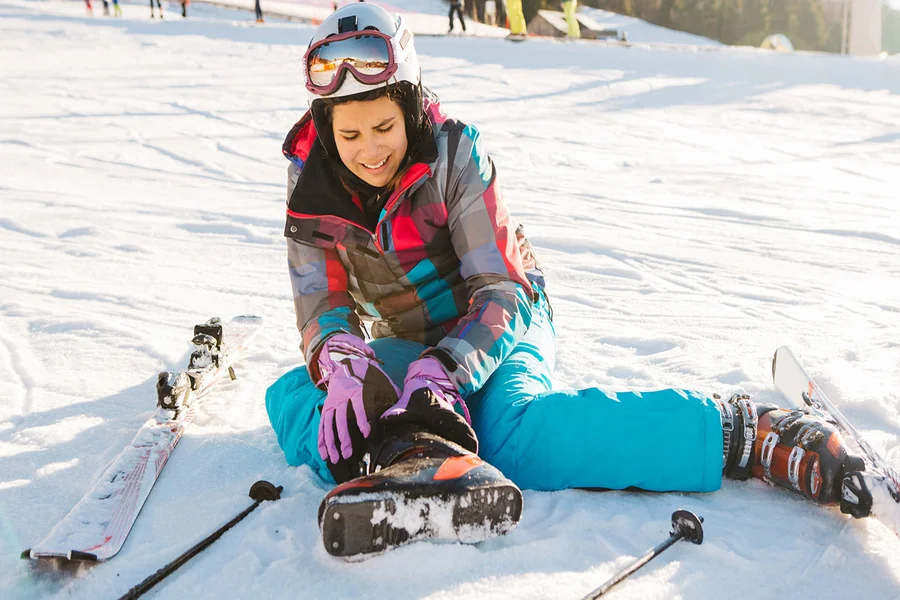
I love skiing. Carving my own path down the slope of a jaw-dropping alpine giant, with friends or alone, gives me enough dopamine to last a lifetime. That is, until something goes horribly wrong. Anyone who skis for a significant length of time can attest to the fact that we all fall over. It’s to be expected, to a degree, but not all falls are created equal.
Some are caused by your own human error, or that of other skiers or snowboarders on the piste. Other injuries happen as a result of hazardous conditions, like avalanches, poor visibility in a whiteout, or in rocks that poke through the top layer of snow.
That’s why we wanted to create a helpful guide that’s designed to support anyone who experiences a dangerous fall and needs to know what they should do next to help the victim.
Block Off the Scene
When you’re on the slope, plant your poles into the snow in an ‘X’ shape a few yards up from the injured skier, alerting others on the piste to steer clear of the site of the accident. After that, you must not attempt to move the injured person, because there is a chance that they might have a spinal or head injury that could lead to permanent damage.
Your best course of action is to cover them in an extra layer of clothing to prevent any risk of hypothermia and to call the resort’s emergency phone numbers. Tell them the name of the run that you are on and your exact position on it. After that, they will be able to send the best professional for the job. If you don’t have any signal on your phone, flag up fellow skiers and ask them to notify the workers at the nearest lift station, along with your precise location.
First Aid
While you’re waiting for emergency services to arrive, only use basic medical intervention. If you suspect that the victim may have a fracture or a sprain, keep the affected limb as still as possible until professionals arrive at the scene. If the injured person wants some food or drink, even though you’ll instinctively want to give them some water or a snack, it is more advisable to decline because there’s a chance they will need surgery later in the day.
Collecting Evidence
Gather the names and contact details of witnesses who saw the incident unfold. If the victim wasn’t at fault for the accident, then they might need to make multiple injury claims in the future, so it’s best that they have all of the evidence that they might need.
Medical and Legal Follow-Ups
In the wake of the incident, the injured party will need follow-ups to discuss the precise nature of the injury and the details of the recovery plan. If they’re pursuing legal action with a personal injury solicitor, like Bond Turner, they will outline the course of action that needs to be taken, along with expected costs and timeframes.
