

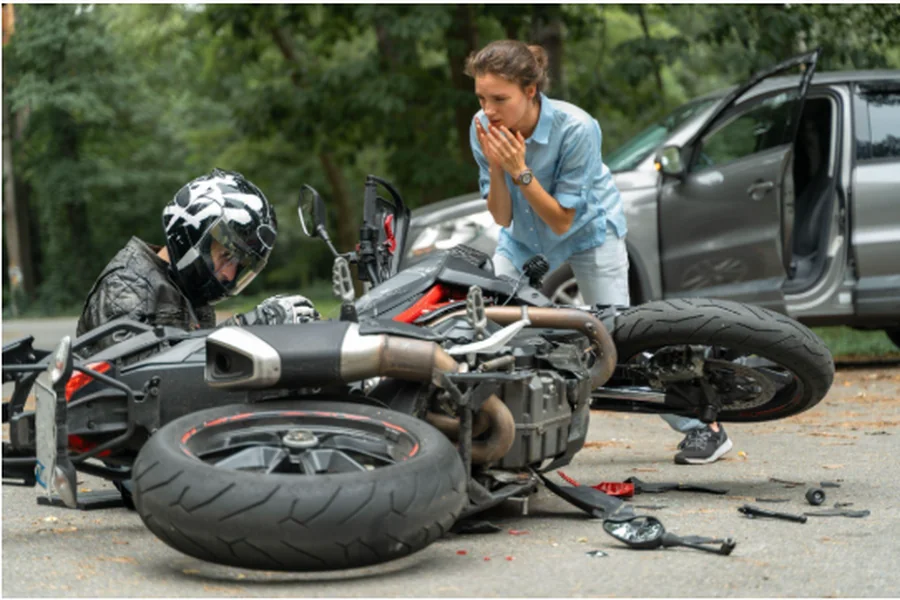
After many motorcycle accidents, drivers often say the same thing:
“I never saw them.”
For motorcycle riders and their families, that statement can feel impossible to understand. How can a driver fail to notice a motorcycle that was directly in front of them?
Yet in many cases, the driver truly believes they never saw the rider before the collision.
This phenomenon is not always about dishonesty or intentional recklessness. In many situations, it is tied to the way the human brain processes information, attention, and visual awareness. Understanding the psychology behind these crashes may help explain why motorcycle accidents happen so frequently — and why they can be so difficult to prevent.
Seeing Is Not the Same as Noticing
One of the most important concepts in traffic psychology is that human beings do not process every detail they see.
The brain constantly filters information to avoid overload. While driving, people unconsciously prioritize certain visual cues while ignoring others.
Drivers are typically scanning for:
- Large vehicles
- Traffic lights
- Lane markings
- Pedestrians
- Immediate hazards.
Because motorcycles are smaller and visually narrower than passenger vehicles, they may not stand out as much.
A driver may physically look toward an approaching motorcycle without their brain fully registering it as a potential hazard.
This is sometimes called “inattentional blindness.”
What Is Inattentional Blindness?
Inattentional blindness occurs when someone fails to notice a visible object because their attention is focused elsewhere.
The brain can only process a limited amount of information at once. When attention is directed toward one task, other important details may go unnoticed — even if they are directly in front of a person’s eyes.
This is not unique to driving. Psychological studies have shown that people can completely miss obvious visual events when concentrating on another task.
On the road, inattentional blindness may occur when drivers are:
- Looking for gaps in traffic
- Watching larger vehicles
- Navigating intersections
- Reading road signs
- Thinking about directions
- Mentally distracted.
Because motorcycles occupy less visual space than cars or trucks, they are more likely to be overlooked during these moments of divided attention.
Why Intersections Are So Dangerous
Intersections are among the most dangerous places for motorcycle riders.
Many serious motorcycle accidents happen when a driver turns left in front of an oncoming rider. In these situations, the driver often reports that they looked before turning but did not see the motorcycle.
This may happen because drivers are unconsciously conditioned to look primarily for larger vehicles.
The brain develops expectations based on repeated experience. Most traffic consists of cars, SUVs, and trucks, so drivers naturally become more attuned to spotting larger objects.
Motorcycles, bicycles, and pedestrians may not trigger the same immediate recognition response.
Additionally, motorcycles can appear farther away than they actually are because of their smaller size. Drivers may misjudge:
- Distance
- Speed
- Closing time
- Visibility.
This can lead to dangerous decisions at intersections.
The Problem With “Autopilot” Driving
Many people drive familiar routes almost automatically.
Daily commutes often become routine, and drivers may operate largely on habit rather than active awareness. This mental state can reduce attention to unexpected or less common roadway users such as motorcycles.
Traffic psychologists sometimes refer to this as “driving on autopilot.”
When drivers become overly comfortable behind the wheel, they may:
- Scan less carefully
- Make assumptions about traffic conditions
- React more slowly to unusual situations
- Pay less conscious attention to surroundings.
This does not necessarily mean the driver is intentionally careless. However, it does increase the likelihood of missing critical information.
Motorcycles are particularly vulnerable to this type of oversight.
Modern Distractions Make the Problem Worse
Today’s drivers face more distractions than ever before.
Even when drivers are not actively texting or using phones, many are mentally distracted by:
- Navigation systems
- Touchscreen controls
- Voice assistants
- Notifications
- Stress
- Fatigue
- Conversations
- Work-related thoughts.
Cognitive distraction reduces situational awareness, making inattentional blindness even more likely.
A driver whose brain is overloaded may fail to fully process motorcycles, pedestrians, or changing traffic conditions, leaving it too late.
Modern vehicles can also create a false sense of security through advanced driver assistance systems, causing some drivers to pay less active attention to the road.
Motorcycles Leave Less Margin for Error
When drivers fail to notice motorcycles, the consequences can be severe.
Unlike occupants of passenger vehicles, motorcycle riders have little physical protection during collisions. Even low-speed crashes can lead to:
- Traumatic brain injuries
- Spinal cord injuries
- Broken bones
- Severe road rash
- Internal injuries
- Permanent disability.
In high-speed accidents, riders may be thrown a significant distance or directly struck by other vehicles.
Because motorcycles are smaller and less visible, riders often have less time to react when another driver suddenly turns or changes lanes unexpectedly.
Defensive Riding Helps — But It Cannot Prevent Every Crash
Many motorcycle riders are highly aware of visibility risks and take defensive measures to reduce accidents.
Riders often:
- Position themselves strategically within lanes
- Use headlights during daylight hours
- Wear reflective gear
- Avoid lingering in blind spots
- Slow down near intersections
- Assume drivers may not see them.
These techniques can help improve safety, but they cannot eliminate all risks.
Ultimately, drivers of passenger vehicles also share responsibility for remaining alert and actively watching for motorcycles.
Awareness Campaigns Matter
Many motorcycle safety campaigns focus on increasing driver awareness rather than placing all responsibility on riders. Messages such as “Look Twice for Motorcycles” exist because visibility failures are so common in motorcycle accidents.
These campaigns encourage drivers to:
- Pause longer at intersections
- Check blind spots carefully
- Avoid assumptions about traffic gaps
- Stay mentally engaged while driving.
Even small changes in driver awareness can reduce serious crashes.
Motorcycle Accident Cases Can Be Complex
After a motorcycle accident, determining exactly what happened can be challenging.
Drivers may insist they never saw the rider, while injured victims and witnesses may describe clear visibility conditions.
Investigations often involve:
- Traffic camera footage
- Witness statements
- Vehicle positioning analysis
- Speed calculations
- Road design factors
- Visibility conditions
- Accident reconstruction.
Insurance companies may attempt to shift blame onto riders by relying on stereotypes about motorcyclists.
An experienced personal injury lawyer in McCallen can help accident victims investigate the circumstances surrounding the crash and pursue compensation for medical expenses, lost wages, pain and suffering, and other damages.
Because motorcycle injuries are often severe, securing fair compensation can play a major role in a victim’s long-term recovery.
Seeing Motorcycles Requires Intentional Attention
The phrase “I never saw the motorcycle” highlights an important truth about human psychology: people do not always notice everything around them, even when they believe they are paying attention.
But understanding why these accidents happen does not make them unavoidable.
Greater awareness, active scanning, reduced distraction, and conscious attention to motorcycles can all help improve roadway safety.
Motorcycles may be smaller than other vehicles, but the people riding them deserve the same awareness, caution, and respect as everyone else on the road.
